
Validation Friday: The GGZ inGeest Antidepressant Tapering Clinic
In the previous edition of Validation Friday, we spoke with psychiatrist Christiaan Vinkers, co-founder of the antidepressant tapering clinic at GGZ inGeest and Amsterdam UMC (www.afbouwpoli.nl). This edition focuses on the tapering clinic itself: how did it come about, how does this approach work in practice, and what have been the initial experiences?
Tapering off antidepressants feels like a natural next step, but in practice, it often isn’t. Hundreds of thousands of Dutch people use antidepressants for extended periods, and for many, this treatment works well. But what happens when things improve and the question arises: Can I stop? That’s where the complicated part begins. While there is a great deal of knowledge about starting and managing treatment, there is far less experience with tapering off. And this is reflected in real-world practice: uncertainty, relapse, withdrawal symptoms, and often a lack of proper guidance. The GGZ inGeest tapering clinic was created to bridge that gap by providing additional knowledge and expertise.
Specialized support for tapering
In 2021, GGZ inGeest and Amsterdam UMC opened the first tapering clinic in the Netherlands. A place where patients receive personalized and specialized support as they taper off antidepressants.
Tapering is a careful process that involves continuously monitoring stability, risks, and what a person can handle. The strength lies in pooling expertise. Nurse practitioners, psychiatrists, psychologists, and pharmacists work together to address a single question: Can a person taper off, and if so, how do we do that as safely as possible?

What does that look like in practice?
The tapering clinic operates on a blended model: a combination of in-person or video consultations and digital support. This allows people from all over the Netherlands to access the clinic. The clinic operates according to the “digital unless” principle. Not because care must be digital, but because this approach makes it possible to support patients more frequently, flexibly, and effectively during the tapering process.
This digital component isn’t an afterthought; rather, it’s the foundation of how care is structured. Through the Minddistrict platform, patients are guided and monitored throughout the entire process, from intake to aftercare. This begins right at the intake, which focuses not only on the desire to taper off but also on the full context: medication use, mental stability, and past experiences.
During the tapering process, continuous monitoring takes place via the platform:
- how the patient is doing
- whether withdrawal symptoms arise
- whether there are signs of relapse
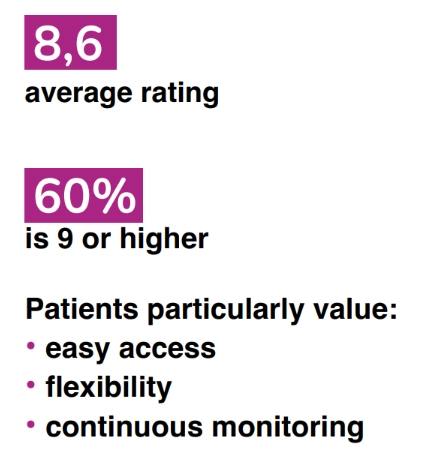
Patients complete questionnaires, keep diaries, and have direct contact with their practitioner via chat or video calls. This combination ensures that care doesn’t just take place during appointments but extends into the patient’s daily life. It is precisely this accessible means of contact via chat that patients find so convenient. Because both the patient and the practitioner can respond in between appointments, they can quickly coordinate without needing to schedule an appointment right away.
And that, in fact, proves to be crucial. When symptoms worsen, adjustments can be made quickly and directly. For example, by temporarily pausing the tapering process or adjusting the pace. As seen in the outpatient clinic’s practice, this continuous monitoring and easy coordination often makes the difference between stabilization and relapse.
What Are the Benefits? Insights from Practice
Although the tapering clinic is still relatively new, initial experiences paint a clear picture: patients are generally positive about the support they receive. The combination of specialized support and accessible contact provides greater control and confidence during the tapering process. The treatment team also recognizes the added value, particularly due to the combination of disciplines and the ability to work in a blended manner.
What patients appreciate:
The next step
The tapering clinic’s ambition extends beyond patient care alone. The goal is to evolve into a center of expertise where knowledge about tapering is developed, gathered, and shared with primary care physicians, psychiatrists, and patient organizations. This role is sorely needed. Although the number of people using antidepressants remains high, there is still relatively little knowledge about tapering them off.
The Tapering Clinic seeks to contribute to this by combining practical experience with the development of knowledge and expertise, and by feeding those insights back into the healthcare system.

Expanding to primary care
The experiences gained at the tapering clinic are now also being used in broader collaborations focused on tapering off antidepressants. Various partnerships are exploring how support for tapering off antidepressants can be better integrated into primary care. The goal here is not only to help more people but also to organize support closer to the patient’s familiar environment.
Projects such as Harmonie and the Innovation Project involve collaboration with organizations like GGZ inGeest, Amsterdam UMC, Radboud UMC, Nivel, patient organizations, and other partners. Work is also underway on initiatives such as afbouwtoolkit.nl, which makes knowledge about safe tapering more accessible to patients and healthcare professionals.
The initial results of these studies and collaborations are expected to be published shortly.
What we can learn from this
Good care is not just about effective treatment; it also requires attention to what comes next. Tapering is not a side issue but an essential part of the care pathway. And there is still much room for improvement in this area.
The tapering clinic demonstrates how specialized guidance, continuous monitoring, and accessible support can reinforce one another during the tapering of antidepressants.
Would you like to know more about this?
Read more about GGZ inGeest’s tapering clinic or watch our interview with psychiatrist Christiaan Vinkers, co-founder of the tapering clinic, about his perspective on psychiatry and the use of antidepressants.

Validation Friday
Improving healthcare. That’s what Minddistricter Barry Meesters works for. Just like the researchers, university medical centres and healthcare organisations he collaborates with every day. Together, they work on the development, validation and dissemination of online interventions that truly make a difference. For the Validation Friday series, Barry speaks with researchers about their personal motivations, dedication and the impact of their work.
Interested or would you like to grab a coffee with Barry sometime? Feel free to send him a message.