
How research evolves into treatment
In the previous edition of Validatie Vrijdag, we spoke with José Custers about her research into fear related to cancer. For fifteen years, she worked with colleagues on a research line focused on fear of cancer recurrence. Read the interview about José’s personal drive and her perspective on impact in healthcare here.
For José, research is never an end in itself. “Research only has value when it ultimately finds its way back to patients,” she explained. “I want to see real impact.” That impact doesn’t happen automatically. There are often years of development and evaluation between a scientific publication and actual implementation in healthcare. Yet this very research line shows that it is possible: from fundamental insights to tangible support for patients. One of its outcomes is the blended psychological intervention Living with Anxiety.
Fear of cancer recurrence
For many people, the impact of cancer does not end when treatment finishes. Even when the disease is under control, the fear that it may return can remain. Research shows that fear of cancer recurrence is one of the most common psychosocial concerns among people after cancer. International studies indicate that 30 to 50 percent of these individuals regularly worry about the disease returning.
For some, this fear remains limited and decreases over time. But for another group, the fear persists and can have a significant impact on daily life. Around one in five people experience long-term, severe fear that the cancer will return.
People may, for example:
- worry more often
- constantly monitor their body for signs of possible recurrence
- avoid medical appointments or, on the contrary, seek them out more frequently
- find it difficult to make plans for the future
While this fear is understandable after such a life-changing illness, severe levels of anxiety can affect quality of life. Especially for people experiencing high levels of fear, psychological support can make a difference.
The goal is not to eliminate fear completely. After all, fear can be an understandable response after cancer. The treatment mainly helps patients learn to relate to that fear differently.
Living with anxiety
The question of how people can be better supported after cancer in dealing with fear of cancer recurrence was central to the research line that José Custers and her colleagues worked on for many years. This collaboration between researchers and clinical practice led to the development of a specific psychological treatment for severe fear of cancer recurrence.
This treatment was developed and studied by Marieke van der Wal within the so-called SWORD study (Survivors’ Worries Of Recurrent Disease): a blended cognitive behavioural therapy aimed at reducing fear of cancer recurrence.
The intervention combines sessions with a psychologist with online support via a digital platform and consists of:
- eight sessions with a psychologist
- online psychoeducation
- cognitive exercises
- videos featuring experiences of other people after cancer
- homework assignments between sessions
The goal is not to eliminate fear completely. After all, fear can be an understandable and functional response after cancer. The treatment primarily helps people change how they relate to that fear, which may also help to reduce it.
Does the intervention work?
To investigate this, the treatment was tested in a randomized study among people who had been treated for, among others, breast, prostate, and colorectal cancer. The results showed that people who received the treatment experienced significantly less fear of cancer recurrence than those who received usual care.
In addition, clinical relevance was also examined: does the treatment make a real difference in patients’ daily lives?
The study shows:
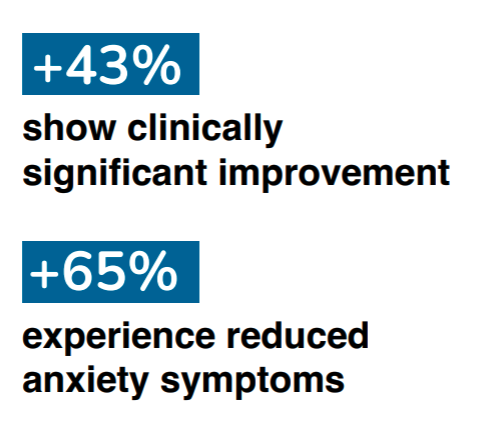
The results also remained visible in the longer term. Follow-up studies showed that improvements in anxiety symptoms and coping skills were maintained.
For many participants, it was precisely the combination of sessions and digital support that proved valuable.
From research findings to care in practice
Developing an effective treatment is one step. Ensuring that the treatment actually reaches patients is at least as important. Follow-up research therefore focused on how the intervention can be applied in practice.
In her PhD research, Esther Deuning-Smit examined how the treatment can be integrated into psycho-oncological care. This included looking at:
- how healthcare professionals can recognize fear of cancer recurrence
- how referral to appropriate support takes place
- and how blended therapy can be embedded in existing care processes
The results show that the intervention is highly applicable in practice. When patients were offered the treatment:
- 79 percent actually started the intervention
- and people after cancer rated the treatment an average of 8.2
For many participants, it was precisely the combination of sessions and digital support that proved valuable. Following this successful feasibility study across multiple settings, efforts are now focused on national scaling to make Living with Anxiety available to as many people as possible after cancer who experience severe fear of cancer recurrence.
Research that drives impact
This research line shows what is possible when research does not stop at publication, but is further developed into care that is actually applied in practice.
From insight into fear of cancer recurrence to a well-founded treatment that supports people after cancer in their daily lives. It is exactly the kind of impact José Custers refers to: “Seeing that what we do together truly works.”
Read the interview about José’s personal drive and her perspective on impact in healthcare here.

Validation Friday
Improving healthcare. That’s what Minddistricter Barry Meesters is committed to. Just like the researchers, UMCs, and healthcare organizations in the Netherlands he works with every day. Together, they contribute to the development, validation, and dissemination of online interventions that truly make a difference. For the Validatie Vrijdag series, Barry speaks with researchers about their personal motivations, dedication, and the impact of their work.
Questions or want to grab a coffee with Barry? Feel free to send him a message.