
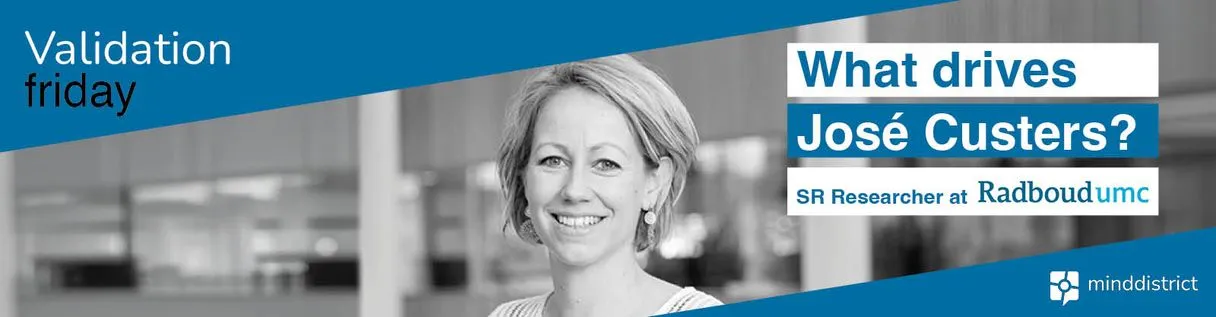
José Custers: "I want to see the impact"
For fifteen years, she conducted research on anxiety in cancer patients. For José Custers, research outcomes are not the endpoint. Research only has value when it truly makes its way into healthcare practice.
Most researchers turn their attention to the next project once their study is completed. Dr. José Custers, senior researcher and research coordinator at Radboudumc, takes a different approach. She remains involved in what happens after research outcomes have been evaluated. “I believe it’s important that my research originates as close to patients as possible and ultimately returns to them,” she explains. “I want to see the impact.”
Ideas for new research therefore do not arise behind her desk, but from questions and signals from clinical practice. “I stay closely involved in medical developments and work closely with clinical colleagues,” she explains. “They sometimes say: take a look at what we’re seeing happening in the consultation room. Shouldn’t we connect research to that?”
Fear of cancer recurrence
This is also how her research into anxiety around scans began. Patients indicated that there was too little attention for the anxiety surrounding scans and conversations in which bad news is delivered. For José, that is the starting point of research that truly matters: listening to what is happening in healthcare and translating it into something that genuinely helps patients. Her interest mainly lies in the psychological mechanisms that transcend specific illnesses. Anxiety is rarely unique to a single diagnosis. “The question is always: what do we already know, what do we observe in a new population, and what helps patients move forward mentally as well as in their treatment?”
The research into ‘scanxiety’ does not stand on its own. It is part of the Fear of Cancer Recurrence research line that José has worked on for fifteen years. What makes her especially proud is that she developed this line together with colleagues and partners from beginning to end. From conceptualisation to treatment, evaluation, cost-effectiveness, and implementation. “We examined it from A to Z and were able to present it to the world with a bow on it. It couldn’t have turned out better. This is how it should be.”
"“I stay closely involved in medical developments and work closely with clinical colleagues. They sometimes say: take a look at what we’re seeing in the consultation room. Shouldn’t we connect research to that?””
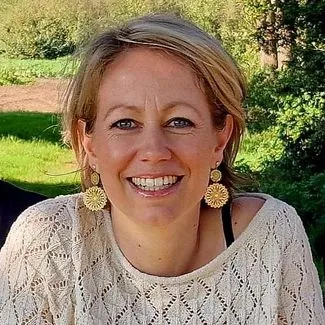
Driven by the process
During her studies, José already noticed that she struggled with straightforward answers. Multiple-choice questions felt too limiting. “There was something to be said for A, but also for B, depending on the context,” she says. “There was no place for nuance.” Looking back, she recognizes this as part of her research DNA: the need to truly understand questions in depth.
Throughout all these years, José has enjoyed going to work. “I can’t recall a single day when I didn’t feel like going. I want to live my best life, with work as part of it.” What drives her is not status or publications, but the process itself: conducting high-quality research with good people. Working together to find out what works, why it works, and for whom. “Seeing that what we do together truly works, that’s what matters most to me,” she says. “When there’s real energy, that’s what makes me happy.”
Working together
That collaboration matters to her becomes clear again when José is asked what she would do with fifty million euros for research. “Split it,” she replies. Invest in fundamental research and in implementation. “To show that it can be done differently.” The value, therefore, does not lie in the amount itself, but in what it proves. “I’m frustrated by a society that is becoming more individualistic,” she explains. “I believe we should all contribute more to society. In our work and beyond. Together, we can achieve so much more.”
She describes how research groups in psycho-oncology, which competed with each other for years, are now joining forces in a shared research proposal. In a field where funding is scarce and researchers often depend on one grant application after another, such collaboration requires courage. “A few years ago, this would have been unthinkable,” she says.
According to José, the barrier lies not only in funding, but also in how the system is structured. “People are cautious and set in their ways. Sometimes a new generation is needed to dare to do things differently. At the same time, funding can give an important push.”
"Who is it intended for? Why does it work? When does it not work? In some cases, if it doesn’t help, it can actually cause harm. Developers and healthcare professionals have the responsibility to provide that context.”
Ehealth needs context
José also sees the need for shared responsibility reflected in digital care. “Ehealth does not stand on its own,” she explains. “It is part of matched care and blended care. It’s about looking together: what can someone manage themselves, where is additional support needed, and when is face-to-face the best option?”
The strength lies precisely in the combination. Information from the consultation room tends to stay with people better when they can revisit it at home, in their own context. Peer videos have a normalizing and validating effect. “You can’t achieve that in a consultation alone.”
For José, there is no doubt that ehealth will become increasingly prominent. “We are heading towards a massive healthcare crisis. So we simply have no choice.” At the same time, it requires careful consideration. “Ehealth is broad and diffuse. The context is often missing.” That concerns her. “So much work goes into developing an intervention, only for it to be released without clear indications, without guidance on how to use it, and without explaining the rationale. Who is it intended for? Why does it work? When does it not work? In some cases, if it doesn’t help, it can actually cause harm. Developers and healthcare professionals have the responsibility to provide that context.”
.webp)
Collaborating for impact
José strongly believes in team science. In collaborations, she deliberately seeks out people, perspectives, and partners who each contribute to a larger whole from their own role. In Minddistrict, she finds a partner that thinks along about the dissemination and application of interventions in practice.
“At Minddistrict, it’s not only about thinking through why the e-learning modules should exist. It’s also truly felt,” she says. “They are driven to make the videos as engaging as possible, so that people will actually watch them.”
This way, what she has carefully researched reaches the people it is intended for. “Together, you can truly make an impact.”
“Seeing that what we do together truly works is what matters most to me. When there’s real energy, that’s what makes me happy.”
.webp)
Validation Friday
Improving healthcare. That’s what Minddistricter Barry Meesters works for. Just like the researchers, university medical centres and healthcare organisations in the Netherlands he collaborates with every day. Together, they work on the development, validation and dissemination of online interventions that truly make a difference. For the Validation Friday series, Barry speaks with researchers about their personal motivations, dedication and the impact of their work.
Interested or would you like to grab a coffee with Barry sometime? Feel free to send him a message.
-
Title A
"Lorem ipsum dolor sit amet, consectetur adipiscing elit, sed do eiusmod tempor incididunt ut labore et dolore magna aliqua. Ut enim ad minim veniam, quis nostrud exercitation ullamco laboris nisi ut aliquip ex ea commodo consequat. Duis aute irure dolor in reprehenderit in voluptate velit esse cillum dolore eu fugiat nulla pariatur. Excepteur sint occaecat cupidatat non proident, sunt in culpa qui officia deserunt mollit anim id est laborum."
CTA A -
Title B
"Sed ut perspiciatis unde omnis iste natus error sit voluptatem accusantium doloremque laudantium, totam rem aperiam, eaque ipsa quae ab illo inventore veritatis et quasi architecto beatae vitae dicta sunt explicabo. Nemo enim ipsam voluptatem quia voluptas sit aspernatur aut odit aut fugit, sed quia consequuntur magni dolores eos qui ratione voluptatem sequi nesciunt. Neque porro quisquam est, qui dolorem ipsum quia dolor sit amet, consectetur, adipisci velit, sed quia non numquam eius modi tempora incidunt ut labore et dolore magnam aliquam quaerat voluptatem. Ut enim ad minima veniam, quis nostrum exercitationem ullam corporis suscipit laboriosam, nisi ut aliquid ex ea commodi consequatur? Quis autem vel eum iure reprehenderit qui in ea voluptate velit esse quam nihil molestiae consequatur, vel illum qui dolorem eum fugiat quo voluptas nulla pariatur?"
CTA B -
Title C
"But I must explain to you how all this mistaken idea of denouncing pleasure and praising pain was born and I will give you a complete account of the system, and expound the actual teachings of the great explorer of the truth, the master-builder of human happiness. No one rejects, dislikes, or avoids pleasure itself, because it is pleasure, but because those who do not know how to pursue pleasure rationally encounter consequences that are extremely painful. Nor again is there anyone who loves or pursues or desires to obtain pain of itself, because it is pain, but because occasionally circumstances occur in which toil and pain can procure him some great pleasure. To take a trivial example, which of us ever undertakes laborious physical exercise, except to obtain some advantage from it? But who has any right to find fault with a man who chooses to enjoy a pleasure that has no annoying consequences, or one who avoids a pain that produces no resultant pleasure?"
CTA C